Wasted Resources
Inaccurate spray patterns and inconsistent liquid application lead directly to excessive use of water, expensive coating chemistry, specialty lubricants, and pumping energy.
Despite their importance, spray nozzles regularly face silent mechanical challenges: gradual clogging, spray pattern distortion, pressure fluctuations, and internal orifice wear.
Failing to continuously monitor and measure spray nozzle performance quietly drains plant resources, cuts operating margins, compromises finished product quality, and increases environmental burdens long before physical alarms sound.
Inaccurate spray patterns and inconsistent liquid application lead directly to excessive use of water, expensive coating chemistry, specialty lubricants, and pumping energy.
Clogged or heavily worn nozzles require unscheduled line stoppages for manual cleaning or emergency swap-outs, directly slashing overall equipment effectiveness (OEE).
Uneven coating weight, poor surface cleaning, or inadequate cooling compromise finished product tolerances, triggering elevated rejection rates, rework loops, and customer claims.
Uneven paint application due to nozzle wear increases paint consumption and requires costly offline sanding and repainting. A study conducted by the University of Warwick found that in a single automotive paint shop, the annual cost of paint waste caused solely by nozzle issues was approximately $500,000.
Improper nozzle performance in wash and sanitation stages leads to microbial contamination risks, excessive consumption of expensive chemical sanitizers, and massive water waste — inflating utility expenses and risking regulatory non-compliance.
Inadequate spray patternation in tablet coating pans directly compromises active ingredient release rates and batch uniformity. Deviations can trigger devastating batch rejections, multi-million dollar product recalls, and severe brand damage.
As these documented benchmarks demonstrate, the consequences of operating unmonitored spray nozzles ripple across the entire balance sheet. Proactive inspection and continuous telemetry are imperative to protect process margins.
Nozzle deterioration is rarely an isolated plumbing issue. It creates secondary mechanical instabilities and workplace safety liabilities that threaten plant personnel.
Over-spraying not only wastes costly fluids but creates severe workplace safety hazards. Where flammable solvents or hazardous chemicals are sprayed, excessive misting sharply increases the risk of fires, vapor explosions, and toxic worker exposure.
Additionally, overspray deposits onto surrounding walkways, creating slick floor surfaces and driving slip, trip, and fall injuries. Runoff into municipal drainage also invites heavy environmental penalties.
Fluctuations in line pressure directly alter nozzle spray velocity, pattern width, and droplet size spectrum. When line operators crank up pressure to compensate for worn nozzles, they accelerate internal orifice erosion exponentially.
Conversely, dropping pressure produces coarse, unatomized droplets and inadequate surface coverage. Automated pressure telemetry identifies anomalies before they derail process chemistry.
Worn spray tips frequently appear to operate normally to visual inspection. However, even microscopic orifice erosion of 10% to 15% can increase liquid flow by 20% to 30%, silently flooding the substrate.
This invisible flow surge squanders millions of gallons of water and tons of chemical concentrate per year while delivering inferior finished product quality.
Enter your operating hours, nozzle count, line pressure, and fluid costs into the Spraying Systems Co. Nozzle Wear Calculator to calculate your exact annual financial leakage.
Measuring spray nozzle performance is crucial for preventing waste, improving line efficiency, and maintaining a secure manufacturing floor.
By systematically monitoring nozzle parameters, operations teams detect deviations early, schedule maintenance during planned shift changes, optimize consumable fluid delivery, and dramatically curb overall operating costs.
Continuous measurement prevents the catastrophic squandering of water, high-value specialty chemicals, and pumping energy. This conserves capital while helping companies achieve ambitious ESG and sustainability mandates.
Early detection flags partial clogging, skewed spray angles, and pressure loss in real time. Resolving issues promptly maintains throughput, prevents emergency line stops, and guarantees consistent surface quality.
Properly operating nozzles eliminate toxic chemical vapor accumulation, fire risks, and slip hazards from pooled liquids. Protecting your workforce mitigates severe OSHA and regulatory liabilities.
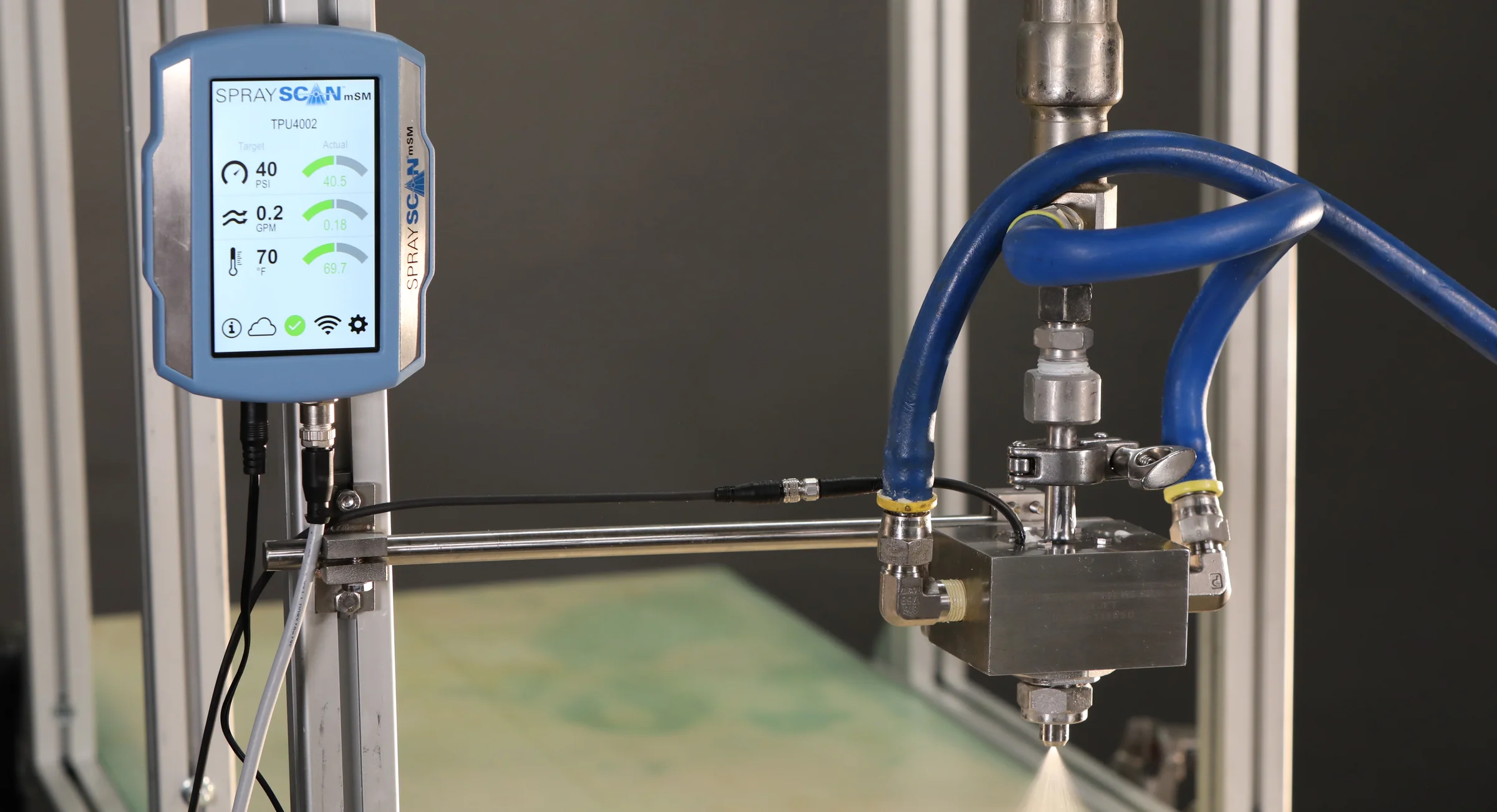
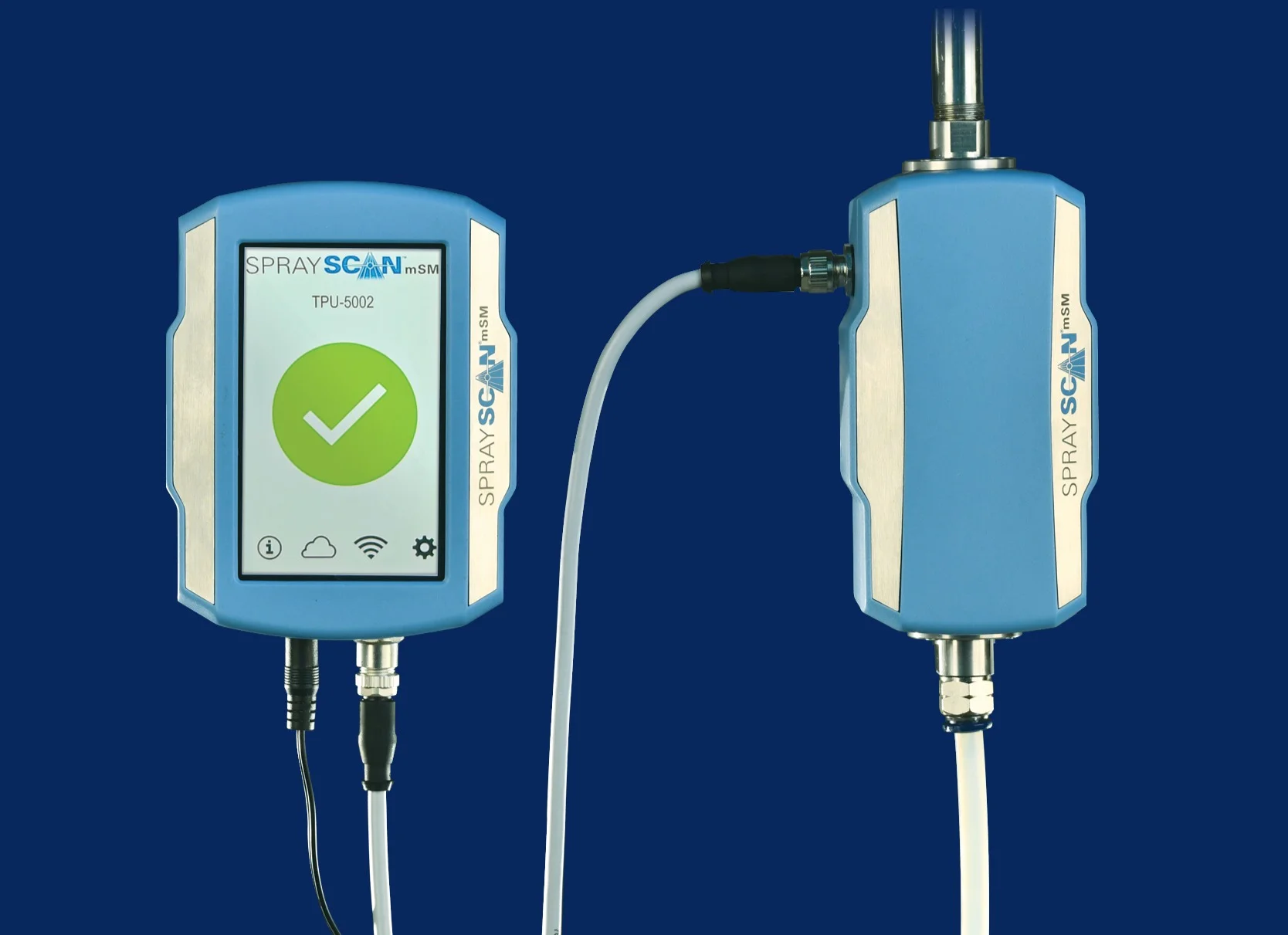
The primary industrial solution for active fluid line monitoring is the SprayScan® mSM (Mobile Sustainability Monitor).
Designed by Spray Analysis and Research Services, the mSM is a rugged, portable telemetry system engineered to capture and evaluate spray operating conditions directly in production. By tracking pressure, temperature, and volumetric flow rate simultaneously, it provides instant alarms when spray parameters drift.
The SprayScan mSM provides essential visibility across industries that rely heavily on spray nozzles for mission-critical processes:
Paint shops, robotic spray applicators, pre-treatment phosphate rinses, lubrication lines, and high-pressure parts washing.
Surface antimicrobial spray, pan oiling, glaze coating, CIP tank cleaning, and container sterilization tunnels.
Large storage tank cleaning nozzles, gas cooling towers, process quench injection, and emergency fire deluge systems.
Precision chemical delivery manifolds, commercial greenhouse misting, crop spray booms, and livestock cooling arrays.
Fluid-bed processors, pan tablet coating, cleanroom sanitation, and aseptic vial washing systems.
The ideal adopters of the SprayScan mSM are plant managers, process engineers, reliability directors, and CI specialists who need to optimize consumable resource consumption, prevent batch-level scrap, and prove compliance with zero-defect quality goals.
By implementing proactive spray diagnostic systems like the SprayScan mSM, manufacturing enterprises achieve immediate, measurable returns across five core pillars:
Massive reductions in wasted water, chemical concentrates, and electricity generate rapid payback on monitoring hardware.
Early detection of clogging or pressure loss prevents unexpected mid-shift shutdowns and shifts maintenance to planned intervals.
Consistent spray pattern distribution and uniform coating thickness guarantee end products strictly comply with tight specifications.
Mitigate excessive chemical mist, vapor fire/explosion hazards, and floor pooling to safeguard technicians and eliminate liabilities.
Meet stringent environmental effluent regulations and document verifiable resource conservation for sustainability reporting.
In summary: Monitoring spray nozzle performance is vital to operational reliability, worker safety, and bottom-line profitability. Implementing continuous telemetry with the SprayScan® mSM turns an invisible point of failure into a continuous source of process intelligence.
Bring us your line operating parameters, nozzle types, and fluid delivery challenges. A Spray Analysis and Research Services engineer will help you quantify potential hidden costs and evaluate telemetry solutions tailored to your plant.